Thursday, 26 August 2021

Problems Accessing Data? Use Professional Data Recovery Services in Toronto

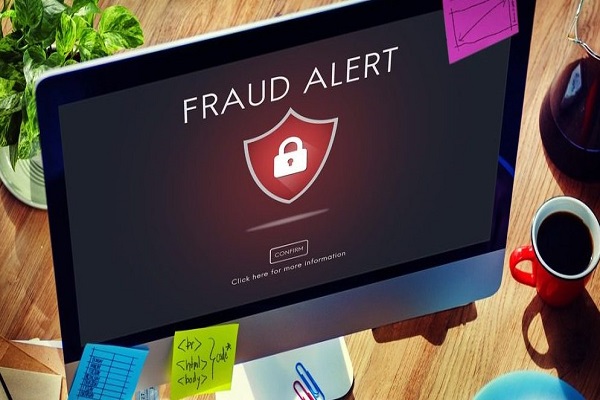
As proof of its commitment to protecting users from the disclosure of their private data and from other virtual crimes, Microsoft Corp. has filed criminal charges against fraudsters who electronically extract private user data worldwide. Taking It Mobile hard disk recovery will share more details about it.

Therefore, Microsoft also urges Internet users in our country to be wary of fraud aimed at identity theft. We appeal to Internet users in our country to be just as careful when doing business online or communication as they would be in the real world. Users can stop the disclosure of data by not responding to e-mails of suspicious origin and content, which ask for personal data.


Users should simply delete such mail. Preventing fraudsters from using the Internet as a tool for fraud is possible only if everyone cooperates. It therefore calls on citizens who use the Internet in their day-to-day communication or business to become more aware of this issue, noting that Microsoft provides all the necessary information and technologies that can protect them from this widespread unwanted and destructive threat.

To avoid scams of this kind, Internet users should take the following simple steps:

Suspect anyone who unexpectedly contacts you and asks for your personal information. It is difficult to establish the legality of a particular content or offer by simply browsing an email, a website, or making a phone call. But the sudden appearance of an unknown person asking you for personal information is usually a sign that something is wrong. Most legitimate companies and agencies do not do business that way.

Do not click on a link in an email asking for your personal information. It can take you to a fake website that looks just like the website of a real company or government agency. Following the instructions, you will enter your personal information on the website and hand it over to identity thieves. To check if the message was actually sent by a company or agency, call it or visit the company's website. If you do not have a phone number, look it up in the phone book, on the Internet or in the information service. Find the official website of the company or institution requesting your personal information through a search engine.

If you are approached by someone who claims to have been a victim of fraud, verify their identity before entrusting them with any personal information. Legitimate credit card issuers and other companies will contact you if an unusual spending pattern indicates that one of your accounts is being used by someone else. But they usually just ask if you’ve done certain transactions; will not ask for your account number or other personal information. If you are a victim of fraud, you will also be approached by the legislature. To be sure, ask the person contacting you for your name, agency or company name, phone number, and address. Then get the phone number of the company or institution from which the alert allegedly came (see advice above) and call to check the existence and authority of the person who contacted you. If you need any help with your data, contact Taking It Mobile hard disk recovery. Find us on BrownBook and SaleSpider

Thursday, 3 June 2021

How Can I Access Data on an Old Computer When I Forgot the Password?

There are various methods you can try to access data on an old computer when you have forgotten the password. If the operating system is Windows 10, it may be possible to reset the password if you remembered to create a password recovery DVD or USB app when you set up the computer.


If you did not, another option is to remove the hard drive from the computer. If the hard drive is not password protected, you can connect a SATA-to-USB cable to it and plug the USB into a different computer.

Once you boot up the computer, it will recognize the hard drive as a removable storage device. You should be able to navigate the drive and browse to find the data you want to recover, like pictures, videos, etc. Then, you simply copy those files to the hard drive on the computer you are using.

If you are tech-savvy, another option is to log into the administrator’s account on the old computer. For home users, most never change the default administrator’s password, which was left blank. You may need to boot the computer into safe mode to switch user accounts depending on the Windows version on the old computer.

Tuesday, 1 June 2021

Is it Worth It Investing in Saving Lost Data

How much is your data really worth? During these years, there were clients who came after a few years, sometimes more than 10, with an old disk that they carefully stored if they sometimes needed it. Sometimes data is invaluable!


Do you need a data rescue service? Taking It Mobile hard drive recovery is the right place for you.

Data is like books and that is why books are worth less today than before. The Internet has somewhat surpassed them. First the professional ones, then the encyclopedias, then the dictionaries and finally the fiction. Only ten years ago, favorite books should have been kept, not only for emotional reasons, because of our dear dedication or some third reason, but also because of a simple fact - where to find it if you want to read it again? An analogy follows - where to find a photo from a summer vacation that was captured on some media? If you don't have a physical copy, and there isn't one in the backup, the only option is a lab that provides a data rescue service?

We rescued one client's photos from mostly unreadable optical media and an external hard drive that failed after five or more years. And then we combined those from both media in whole. And we failed to save everything. Most yes, but some are lost forever. In some cases, the data can be reconstructed. From paper documents, by typing. The technique is thousands of years old! It is here that it is decided whether something will be reconstructed or saved. This is what most technicians experience while working with saving data.

The price is the one that usually decides, the less time it takes for the reconstruction to be done. It depends, of course, on the quantity. For those who follow the statistics, both those on data loss and those on rescue, there is a possibility to get a package that is there to prevent the loss or that, if it does occur, data recovery is convenient or even free in depending on the type of service. In the end, the most important thing is that data recovery is possible!

Manufacturers such as Western Digital have opted for affiliate programs with certain providers. The question is that at a time when it is possible to control cars from the other side of the world via a computer, why is it not possible to damage the disk remotely and is there any security measure or not? Or protection? Especially when one and the same company is responsible for both the device and the eventual recovery. On the one hand this seems convenient? Do I get a disk and some protection? but is it the same one who used the floods in Thailand to artificially raise prices?

The decision is up to you.No matter what you decide to go for, make sure that you get our contact information from Google and HotFrog.

Monday, 19 April 2021

4 Ways to Backup an Android Tablet or Phone


If you didn’t have a recent backup, you might not be able to recover your files, pictures, videos, and other data from your device. To avoid finding yourself in this situation, you need to be proactive and backup your Android device frequently using one of these different methods.

Backup Option #1: Google Photos.

Most Android devices can be linked to your Google account for cloud-based backups. Google offers the ability to backup your photos and videos to Google Photos. You can perform this backup by going into the settings for your device and selecting where you want to backup and sync your photos and videos.

Backup Option #2: Google Drive

For data files stored on your Android device, you can use Google Drive to perform a backup. You will need to download the Google Drive app if it is not already on your device. Simply open the app, tap the “+” sign in the lower right, and choose what files you want to upload.


Many people rely on their Android tablet or smartphone to perform a wide range of functions and for data storage. If you ever lost your tablet or phone, or it was accidentally damaged beyond repair, you know how devastating it can be to lose important data.

Tuesday, 13 April 2021

6 Common Mistakes People Make When a Hard Drive Crashes


Hard drive crashes and something that you must face could happen. Whether you have a conventional SATA drive or a newer solid-state drive (SSD), you must remember, your hard drive is a complex piece of equipment. Sooner or later, they can and do wear out and crash.


Unfortunately, people and businesses alike, tend to not plan accordingly. When their hard drive crashes, they go on to make other mistakes that could affect their ability to recover their data.

Mistake #1: Not having a backup of your hard drive.

The most common mistake made is never taking the time to back up your hard drive. Hard drives fail every day. It is better to be prepared by having a backup of your data just in case.

Monday, 12 April 2021

The Top 4 Current Internet Scams of 2021 to Watch Out For

Internet scams are constantly changing and evolving to attempt to trick people into giving out their personal information, financial account details, and even their money. Internet scams are huge business for scammers that easily cost people and businesses billions of dollars every year.


Top Scam #1: COVID-19 Scams

Anything related to COVID-19 and the global pandemic has become a new opportunity for scammers. They are taking steps to make their scams look like they came from a legitimate source in emails, text messages, and pop-up ads on websites. Some of the more common COVID-19 scams include:

  • Fake websites that feature face masks, disinfectant wipes, hand sanitizer, and other products in high demand.
  • Fake financial offers like ones to refinance your home, easy approvals for personal loans, and so on. Many of these scams look real and were sent by legitimate financial institutions.
  • Fake health organizations that are attempting to obtain your personal information by offering free COVID testing, vaccinations, and other such medical services.
  • Fake government agencies that claim to have details about stimulus payments, tax payments, and so on. The most important thing to remember is a government agency will never call, email, or text. They will notify you by mail when they have information to share that affects you directly.
  • Bogus nonprofit organizations that are seeking donations to provide financial relief, food, and medicine for those in need. If you want to donate to a nonprofit, do so directly, never through a link provided in an email or text message.


Tuesday, 6 April 2021

How to Protect Your Data Online


Any personal information that can be linked to you online enters your digital fingerprint. Your personal data that you leave on social networks - name, surname, place of residence, school you attend, your interests, photos and videos, comments you write below the content that others post. The digital footprint is your trace in the digital world. Unlike the real world, this trace is almost impossible to erase according to Taking It Mobile Toronto.


HOW TO PROTECT YOUR PRIVACY ON THE INTERNET?

When opening a profile on new social networks, it is not necessary to leave all the information, no matter what we are asked to do. There are those mandatory data such as name and surname, but also those that are not mandatory and that should never be left, such as phone number, residential address, school you attend.

I'm sure you've heard of the term "cookies". Cookies are small files that are located on the sites you visit, and they collect information about which articles you read, which content you search. Then when you return to that page one day, the content will be tailored to your interests. This is not so bad, because interesting content is available to you without much searching. However, this in a way violates your privacy, that is, the freedom to decide what you want. What’s good is that we can manage cookies ourselves. To prevent our data from being collected by a third party that may "invade" the page or site you're reading, you can find the "cookies" option in the privacy settings of Google Chrome or other browsers you use, and then block "third-party cookies" “.

In that way, you are actually preventing a page that you did not want to visit and that you are not interested in, from collecting further data about your activity,

PASSWORDS

A good password should be easy to remember, but not simple. It should be created from letters - smaller and larger, from numbers and signs. You should not share your password with anyone

ONCE ON THE INTERNET, FOREVER ON THE INTERNET

Before you post your photo or video on social media, think about who will watch it all - your parents, teachers, friends from school. Think before you send a photo or video to your friends. You never know if you will ever come into conflict, so that person will want to abuse you. Also, if your friends send you their content, do not violate their right to security and privacy.

KEEP YOUR PERSONAL INFORMATION LOCKED

The term "phishing" is important here, which is most often done via e-mail. It would literally mean "fishing people via email". This is done by certain people who are willing to abuse other people, sending emails that contain a link to a page that is actually fake. This page is used by those who "get caught" to leave their personal data, and in order to allegedly receive some prizes, they would get some discounts. Usually personal data, credit card, bank account are required. Find us on Google and 2FindLocal.

Some of the Common Mistakes People Do When Their Hard Drive Crashes

No matter how much you think that your hard drive is not going to crash, there is always a chance that it will happen. It does not matter wh...